
You’ve heard someone call CQ three times. You wrote down their call sign on the back of an envelope. Then you started thinking about what you’d say, and by the time you had an opening line, the operator had moved on. You remember the whole exchange apart from the bit where you imagined yourself speaking.
Start with the first reply and the moment you stop talking to hear what comes back. You can practice both at your kitchen table. Once those few seconds feel familiar, there’s room to pay attention to the person on the other end.
Listen to a few contacts before writing your own
The Japan Amateur Radio League’s beginner guide recommends listening to experienced operators before you transmit. Its sample voice exchange starts with CQ, a general call to any station listening. The responding operator says the other station’s call sign, identifies their own station, and hands the turn back.
Listen for those handoffs in ordinary contact. Write down the first complete call sign you hear. Then notice what happens after the reply. In the Japanese example, kochira wa introduces the speaking station, and dōzo invites the other person to take their turn. Once you can hear that pattern, it’s easier to tell when an operator is inviting a response and when two people are already talking to each other.
Give yourself a small job each time you listen. You might follow just the call signs in one exchange and the handoffs in the next. Atsugiham’s guide to getting started with the violin recommends short practice sessions and learning to listen as you develop your technique. Five minutes spent following a conversation on the radio gives you something specific to rehearse later.
Rehearse the first reply
Start with an exchange short enough to fit on an index card. Use STATION A and STATION B as labels for the exercise. When you’re on air, use the stations’ actual call signs.
Other operator “CQ, this is STATION A calling CQ. Over.”
You “STATION A, this is STATION B. Good evening. Over.”
Other operator “STATION B, this is STATION A. Good evening. Is this your first contact? Over.”
You “Yes, it is. Thanks for coming back to me. Over.”
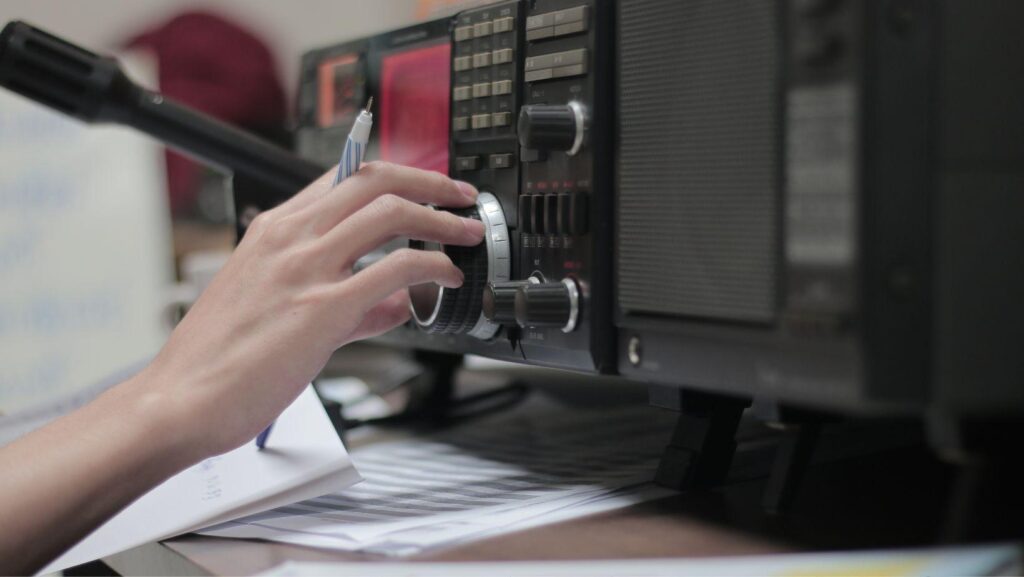
Read your part aloud. Notice where you rush the letters or tack on an extra sentence because it feels odd to stop. On a push-to-talk radio, the other operator needs you to release the button before you can hear their reply. At the table, set your pen down when you finish a line. It gives you a physical cue to stop talking and listen.
Once you’ve read it through, a text chat on the official website JOI AI can stand in for the other operator. Ask it to start with a general call as STATION A, give you one short transmission at a time, and wait until you reply as STATION B. Say your answer before typing it. In the next round, ask the other station to change the question. You’ll get to practice answering whatever comes back.
Practice what to say when you miss something
The clean exchange gets you started. For the next round, ask the chat to mark one letter as unclear in the other station’s mock call sign. Keep the rest of the reply simple. Once you know the other operator is addressing you, try asking “Could you repeat the last letter of your call sign, please?” That gives them a short, specific question they can answer.
When the missing letter comes back, write down the complete practice call sign and read it back. Then pick up the conversation where you left off. You can do the same exercise with a name or a location. A request to repeat one detail helps both people know exactly where to resume.
Try a round where nobody responds immediately. In a text rehearsal, turn away from the screen and count a few seconds before reading the next line. You’ll have a little time to notice the urge to call again. At the radio, use that pause to listen. If a voice comes back, you want to catch the first letter.
You can also have a friend read the other station’s lines aloud. Ask them to pick one detail to repeat and leave you to work out which one you missed. A text chat gives you practice choosing the words. Hearing a person say them lets you practice catching them at somebody else’s pace.
Bring one prompt to the radio
Before transmitting, check the licensing requirements where you operate and make sure your authorization covers your station and setup. A local radio club or an experienced operator can help you work through questions about equipment and operating practices. You can bring the little script you used at the table and ask how it would sound on the air where you live.
Keep a small card by the microphone. Write down your own call sign, leave a line for the other station’s, and add the sentence you’ll use to ask for a repeat. If you want one more line, make it a simple goodbye. The Japan Amateur Radio League’s guide describes ‘73’ as a common sign-off. A plain “Thanks for the contact” works in the rehearsal, too.
Your first contact might be short. Someone could tell you where they’re calling from and ask how you’re hearing them. Answer that question and give them their turn. Later, you may remember the person who came back to you more clearly than anything you rehearsed, even if you had to ask them to repeat the last letter.